Applied AI Systems

While my Ph.D. trained me to dissect complex problems with academic rigor, my drive for human connection, rooted in my community leadership, inspires me to build tangible solutions.

Since graduating, I bridge these worlds by leveraging Large Language Models (LLMs) and modern AI stacks to rapidly transform ideas into deployed systems. The following projects represent my agile approach to AI engineering: identifying critical daily needs and engineering practical, high-utility solutions that make life safer and easier.

Taiwanese in Ghent, The Survivor Kit - A Serverless LLM-Agent Deployment

Taiwanese in Ghent, The Survivor Kit - A Serverless LLM-Agent Deployment

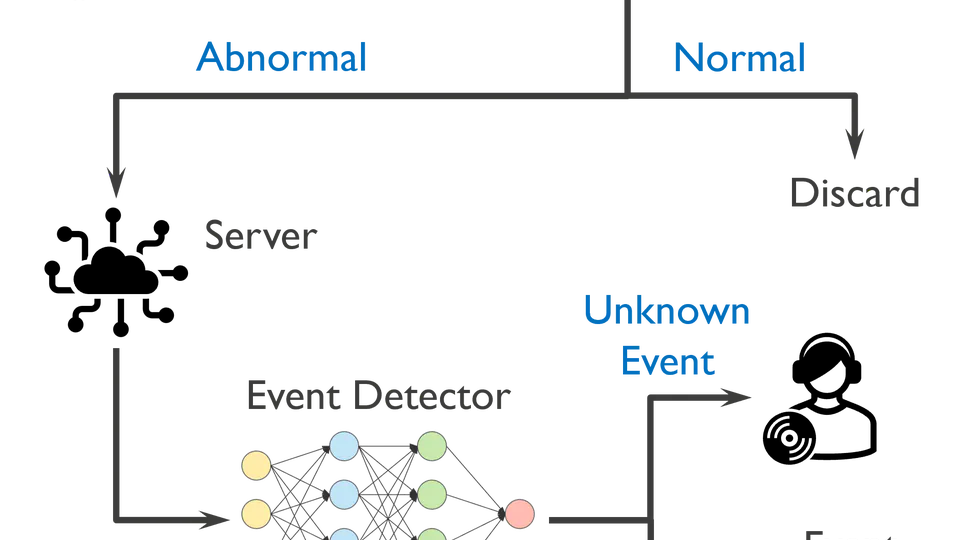
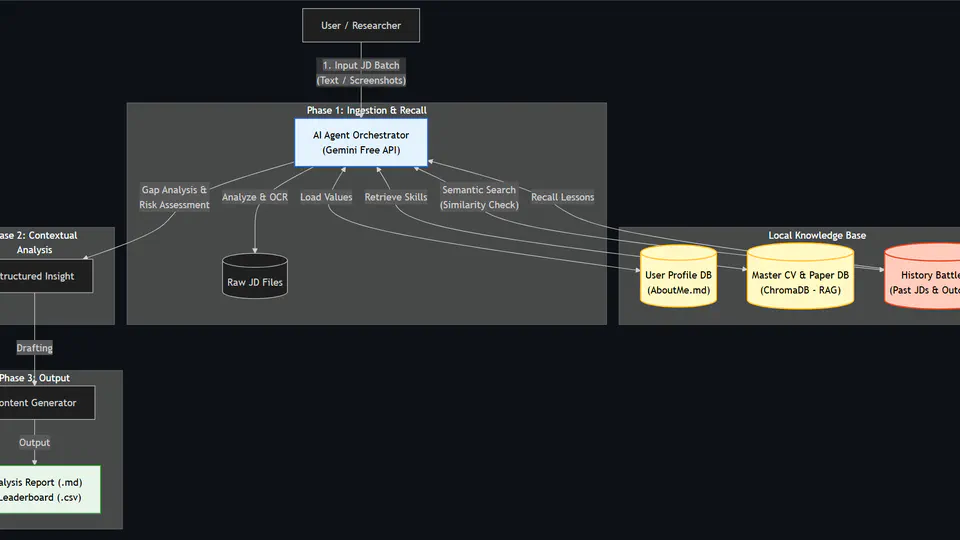
Taiwanese in Ghent, The Survivor Kit : AI-Powered Community Platform A serverless, AI-driven information hub designed to automate community management and solve information fragmentation for international students. Motivation & Product Philosophy Taiwanese in Ghent, The Survivor Kit is a comprehensive survival guide platform. Originally engineered for students, I collaborated with the current president of UGent Taiwanese Student Association (TSA) to redefine the product roadmap, expanding its scope to serve the entire Taiwanese expatriate community. This ensured the system aligned with actual operational needs rather than just technical novelty. “I built this not just as a developer, but as the former President who identified the root cause of platform failure.” I recognized that previous platforms failed due to high operational friction. To solve this, I set a strict constraint: The system must be “low-maintenance” and operable by non-tech staff. This drove the decision to adopt a serverless architecture combined with autonomous AI agents, allowing for rapid iteration and a “set-and-forget” operational model. Role: Product Owner & Full-Stack Engineer Scope: Requirement Analysis → System Architecture → AI Agent Development → CI/CD Tech Stack AI & NLP: Python, Gemma 4 27B (LLM), Feedparser (RSS), Prompt Engineering Backend / CMS: Google Sheets API (NoSQL/CMS), Google Apps Script, Event-Driven ETL Frontend: Next.js 14 (App Router), TypeScript, Tailwind CSS, ISR Infrastructure: Vercel (Serverless), GitHub Actions (CI/CD), Docker Technical Architecture & Implementation 1. AI-Driven Intelligence Pipeline (Event-Driven ETL) The core innovation is an automated pipeline that monitors, analyzes, and translates local news without human intervention, effectively functioning as a domain-specific AI agent: Data Ingestion: A Python-based agent continuously monitors municipal RSS feeds (stad.gent) and emergency alerts. LLM Integration (Gemma 4 27B): Deployed Gemma 4 27B to perform semantic analysis on raw Dutch texts. Structured Prompt Engineering: Designed rigorous prompt templates to enforce valid JSON output from the LLM. Tasks include: Importance Grading (Level 1-3), Audience Classification (Student vs. Resident), Traditional Chinese Translation, and Summarization. Robustness: Implemented retry logic with exponential backoff to handle API rate limits and ensure pipeline reliability. ETL Execution: Structured data is automatically validated and written back to the Google Sheets CMS, triggering frontend updates. 2. Serverless Full-Stack Architecture Designed a cost-efficient architecture suitable for long-term operation: Headless CMS (Google Sheets): Abstracted Google Sheets into a JSON API. This allows non-technical staff to manage content via a familiar spreadsheet interface, eliminating database costs ($0/month) and lowering the maintenance barrier. Frontend (Next.js 14): Implemented incremental static regeneration (60s revalidation) to ensure high performance and SEO while keeping data fresh. 3. CI/CD & DevOps GitHub Actions: Orchestrated daily cron jobs (UTC 6:00) to execute the news crawling and AI analysis agents. Security & Reproducibility: Managed API Secrets via GitHub Secrets and utilized docker to ensure environment consistency for the AI agents. Automated Deployment: Configured Vercel for automatic deployments on git push, establishing a production-ready lifecycle. Key Results & Impact 100% Automation: Achieved a fully automated loop for news gathering, translation, classification, and publishing. Zero Operational Cost: Leveraged serverless tiers to maintain costfree_, ensuring the project’s financial sustainability for the student association. Solved “Technical Debt”: Created a system that requires no coding skills to maintain, addressing the high turnover rate inherent in student organizations. Resources Live Website GitHub Repository AI Agent Source Code - Python agent for scraping and LLM processing. Prompt Engineering Templates - Structured prompts for Gemma 4-27B.

Research Projects

While my applied work prioritizes user-centric utility, it is built upon a foundation of rigorous academic inquiry established during my doctoral and master's studies.
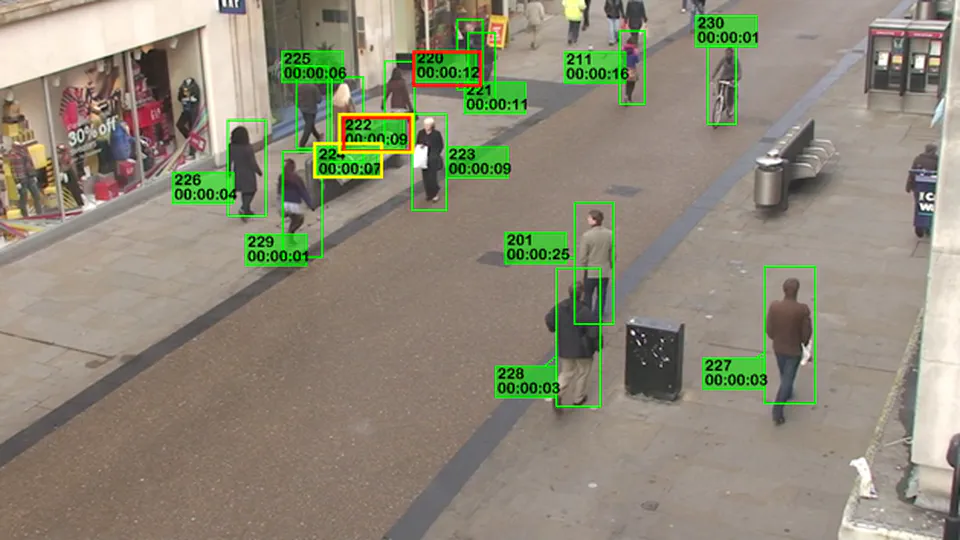
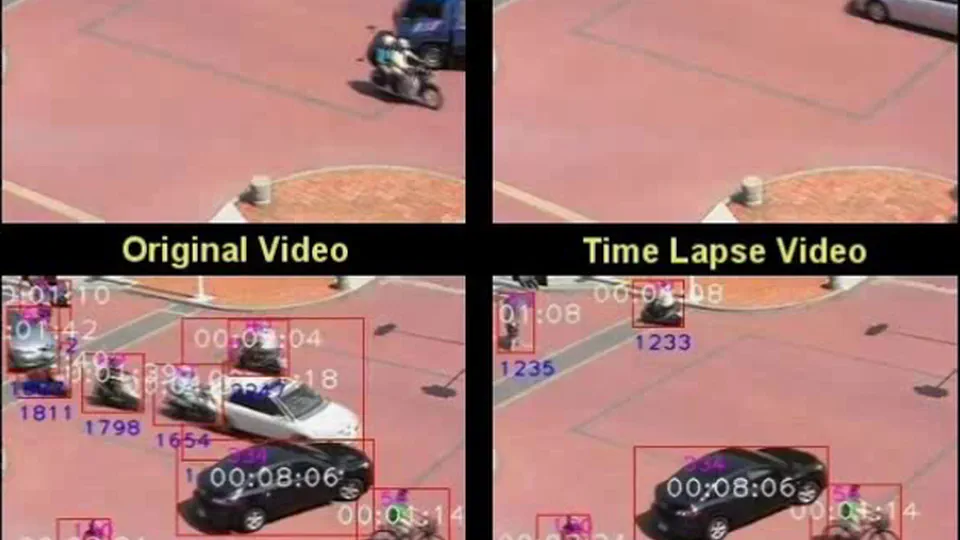
My academic journey at Ghent University and NCKU centered on analyzing real-world data within the fields of surveillance and driver monitoring, with a specific emphasis on audio-visual modalities. I investigated the critical gap between controlled lab environments and unpredictable real-world deployments, proposing novel mechanisms and unsupervised frameworks to bridge this divide. My research spans computer vision, audio processing, and multimodal representation learning, extending into privacy preservation and transferability assessment. This body of work represents my dedication to pushing the boundaries of what AI can perceive without compromising the rights of the people it protects.
Multimodal Driver Monitoring & Temporal Face Analysis

Multimodal Driver Monitoring & Temporal Face Analysis

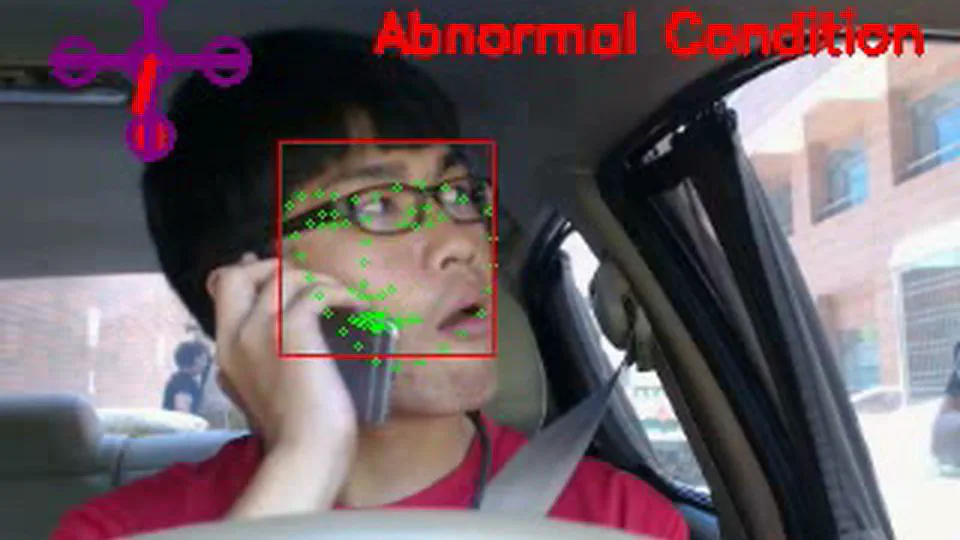
Multimodal Driver Safety System & Robust Face Analysis A holistic driver monitoring framework developed with ARTC, fusing visual temporal dynamics and ECG signals to enable early anomaly detection and proactive safety intervention. The Research Gap & Motivation From Passive Recording to Proactive Intervention: Standard recognition models often fail in real-world cockpits due to inter-personal variability. A generic model struggles to distinguish between a driver’s natural features (e.g., droopy eyelids) and fatigue. Our Goal: To build a safety-critical system capable of early detection of compromised states by combining non-intrusive visual monitoring with physiological signals (ECG), reducing false alarms and ensuring timely intervention. Operational User Scenario (How it Works) To address the variability mentioned above, the system operates in a three-stage safety loop: Initialization (The “Handshake”): When the driver starts the car, the system silently records a short “calibration sequence” to learn their current appearance (e.g., wearing sunglasses, heavy makeup, or fatigue). This establishes a Personalized Normal Driving Model (PNDM) for the specific trip. Dynamic Monitoring: As the vehicle moves through changing environments (e.g., entering a dark tunnel or facing high-beam glare), the alignment-free visual descriptor maintains robust tracking without being confused by lighting shifts. Proactive Intervention: If the driver shows signs of drowsiness (e.g., prolonged eye closure) AND the ECG sensor detects physiological fatigue, the system triggers a multi-stage alert—first warning the driver, and in critical cases, notifying fleet management or emergency services. Core Methodologies Visual Algorithms: Temporal Coherent Face Descriptor (alignment-free, robust to lighting). System Integration: Multimodal Sensor Fusion (Vision + ECG). Modeling Strategy: Sparse Representation-based Classification with online dictionary learning. Validation: Co-developed and tested with the Automotive Research & Testing Center (ARTC). Technical Architecture & Innovations 1. Personalized Calibration (User-Centric Design) The Problem: Drivers look different every day. Pre-trained generic models fail when users change appearance. The Solution: Implemented a rapid initialization phase that builds a dynamic baseline for each trip. The algorithm detects anomalies based on relative deviation from this baseline, effectively filtering out noise from accessories or facial structure. 2. Robust Temporal Modeling (Visual Subsystem) Alignment-Free: By leveraging temporal consistency across continuous frames, we eliminated the need for fragile face alignment steps, ensuring stability even under rapid head movements. Lighting Invariance: Utilized intensity contrast descriptors to maintain accuracy in challenging lighting conditions (e.g., nighttime driving validated in NCKU-driver database). 3. Proactive Safety Trigger (System Level) Multimodal Logic: Designed the visual module to work in tandem with ECG sensors. While ECG detects physiological drops in alertness, our visual module confirms behavioral lapses (e.g., nodding off). Impact: This cross-verification significantly reduces false positives, ensuring that alerts are only triggered for genuine safety risks. Outcomes & Validation Industry Collaboration: Co-developed with ARTC. Award-Winning: Secured Second Place at the International ICT Innovative Services Awards. Performance: Achieved real-time performance and superior accuracy over state-of-the-art baselines in nighttime scenarios. Resources Publications: Wang Wei-Cheng, Ru-Yun Hsu, Chun-Rong Huang, Li-You Syu (2015). Video gender recognition using temporal coherent face descriptor. IEEE/ACIS SNPD 2015. Chien-Yu Chiou, Wang Wei-Cheng, Shueh-Chou Lu, Chun-Rong Huang, Pau-Choo Chung, Yun-Yang Lai (2019). Driver Monitoring Using Sparse Representation With Part-Based Temporal Face Descriptors. IEEE T-ITS.

Research Engineering

"Where theoretical rigor meets production constraints."

This section showcases my work in translating complex research algorithms into robust, deployable systems. Here, the focus is on performance, reliability, and architectural precision.